a stat investigation
How Epic’s iron grip chokes innovation in health tech
Mike Reddy for STAT
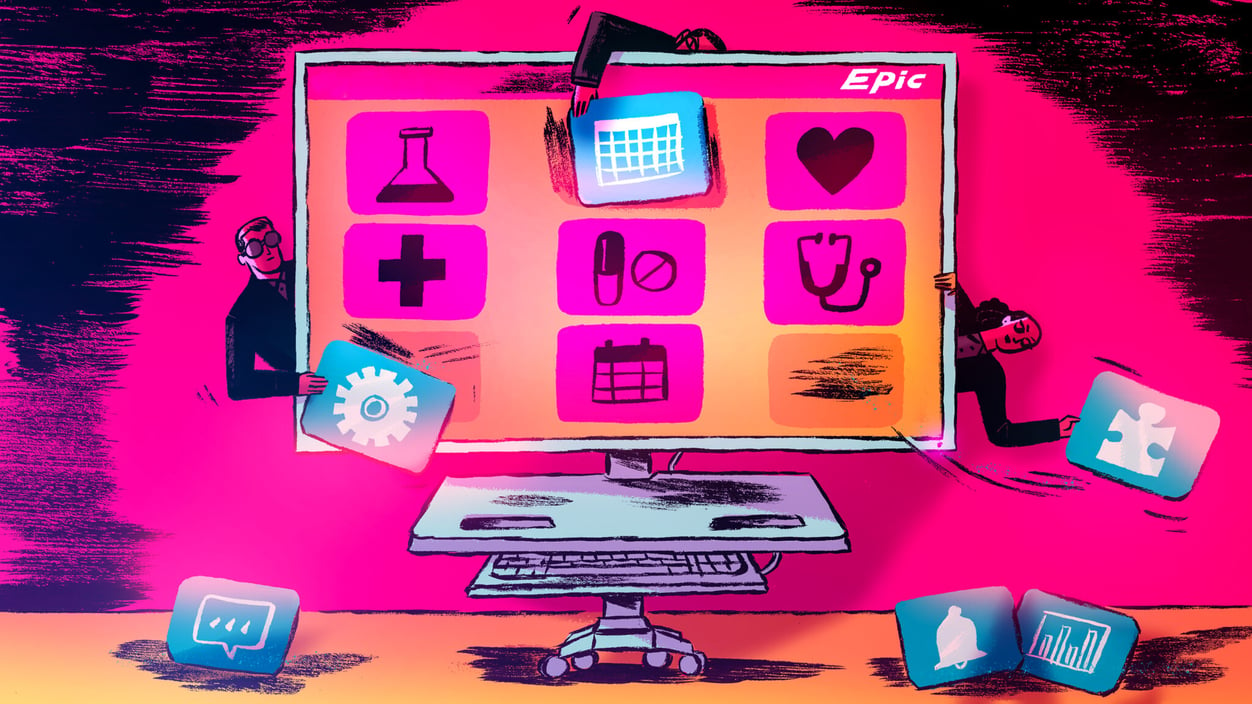
There’s a single, privately held business in charge of most patient data in the U.S. You’ve almost certainly heard of it — you’ve probably also logged into the company’s MyChart software to message your doctor or look at test results. Epic Systems Corp. holds data on some 8 in 10 Americans, and its hospital record-keeping software covers more than half of the country’s inpatient beds. A new STAT investigation found that the company selectively withholds access to these data to the disadvantage of rival software tools, leaving its own products unchallenged.
“It has killed innovators left and right,” one senior executive at a longtime Epic hospital customer said. “It’s time for a change.”
STAT’s Casey Ross and Brittany Trang conducted more than 50 interviews with leaders of health technology companies, hospital executives, consultants, investors, and former Epic employees. It’s not only competitors who voiced complaints, but also some of Epic’s own hospital customers. The investigation came out of the pair’s previous reporting on antitrust lawsuits and inquiries into the company, as well as the increased willingness of concerned sources to supply documents and other information demonstrating a pattern of behavior by Epic, Casey told me. Read the first story of a new series, Inside Epic’s Empire, that will investigate the company’s growing dominance and its impact on competition and innovation amid the AI boom.
(And if you’ve been impacted by Epic’s actions in the health technology marketplace, Casey and Brittany want to hear from you. Share your experience here.)
notable quotable
‘Even as a pediatrician of 18 years, I have never seen a case of measles outside a textbook’
That’s pediatrician Katie Lockwood, who wrote a First Opinion essay published today about how doctors can help families stay both calm and informed about measles. Despite never having seen a patient with measles, Lockwood hears from parents nearly every day who are scared of the disease and want to know how to protect their children.
“The symptoms of measles sound like every illness a child could bring home from day care,” Lockwood writes. “Therefore, understanding what measles is, and isn’t, becomes even more important.” Read more.
reproductive health
Is the fertility industry anti-feminist?
In a new First Opinion essay, an internal medicine physician says yes. Pooja Yerramilli froze her eggs a few years ago, “and the experience was anything but empowering,” she writes. In the last decade, the number of patients freezing their eggs has increased exponentially. That’s likely due in part to positive factors like increased awareness and accessibility, Yerramilli acknowledges. But her own experience was something else.
“From the moment I entered the doctor’s office, I felt reduced to nothing more than a vessel for reproduction — a severely flawed, cracked vessel, through which my eggs were rapidly escaping and deteriorating with every passing day,” she writes. Read more about what Yerramilli characterizes as a sort of coercive, complicated process (which at one point involved, I was shocked to read, venmoing a nurse for administering a precisely timed “trigger shot”).